
April 6, 2026
Waikato Rural Market Update – Quarter 1
We endeavour to provide a succinct summary of the key factors currently influencing the rural property market.
In summary, the outlook across the rural sector is notably positive. Product pricing remains strong, while cost inflation has largely stabilised. OCR reductions through 2025, flowing through to lower interest rates, combined with excellent growing conditions and a lower New Zealand dollar supporting export returns, have all contributed to improving confidence across the pastoral sector.
Put simply, it feels like the stars are aligning again. However, one emerging unknown is the recent spike in oil prices, which could place renewed upward pressure on farming input costs, particularly fuel, freight and fertiliser. At this stage, the magnitude and duration of that risk remains uncertain, but it is a development worth monitoring.
Top 5 Takeaways





Waikato Dairy Farm Sales Volume
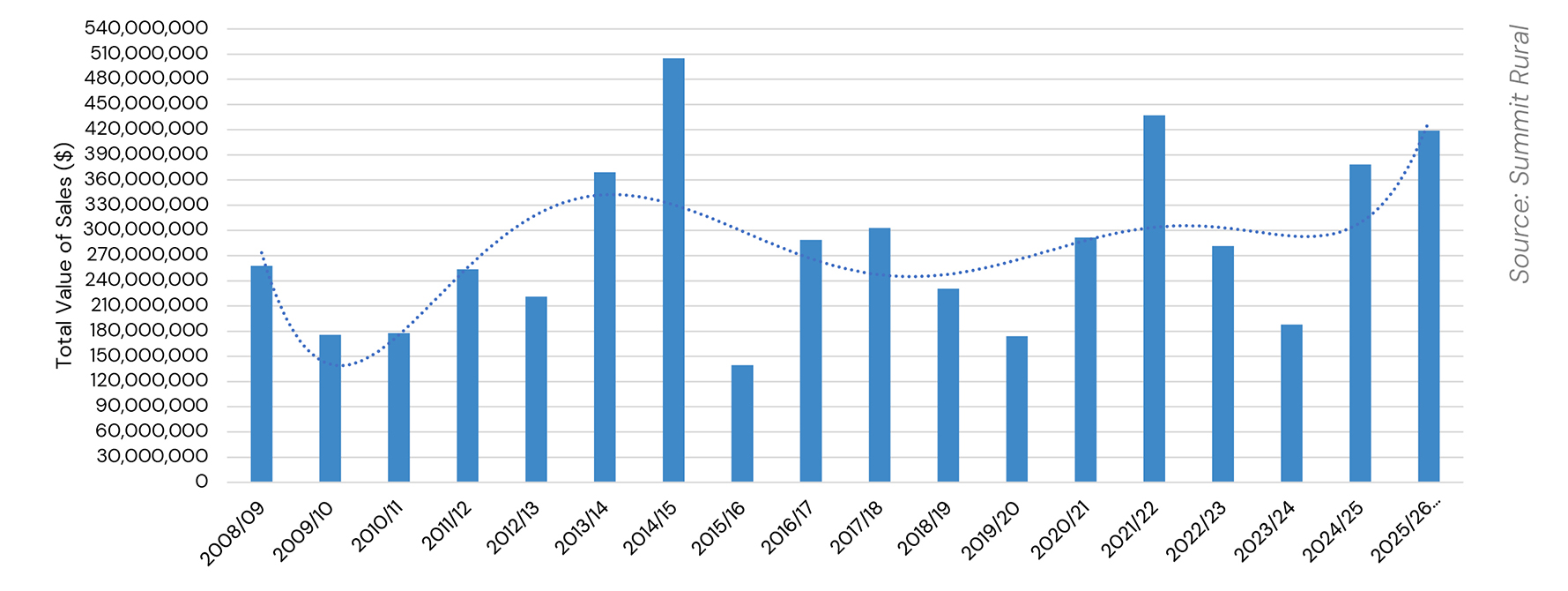
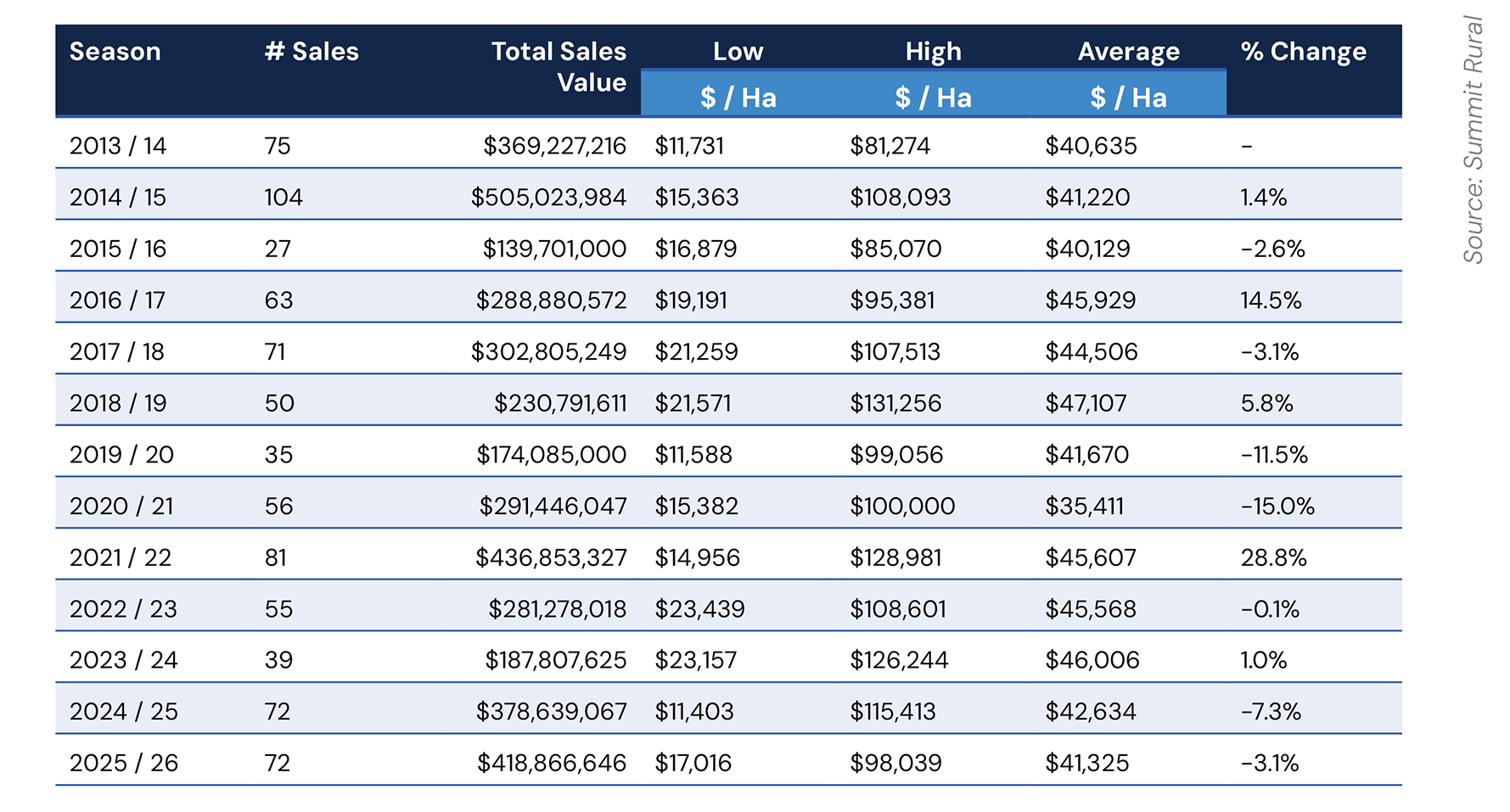
The number and aggregate value of transactions has risen significantly, with the 2025/2026 season the third highest in terms of aggregate sales value within the past 17 years.
With two months to go, the aggregate total may get near 2021/2022, but still behind the peak 2014/2015 season.
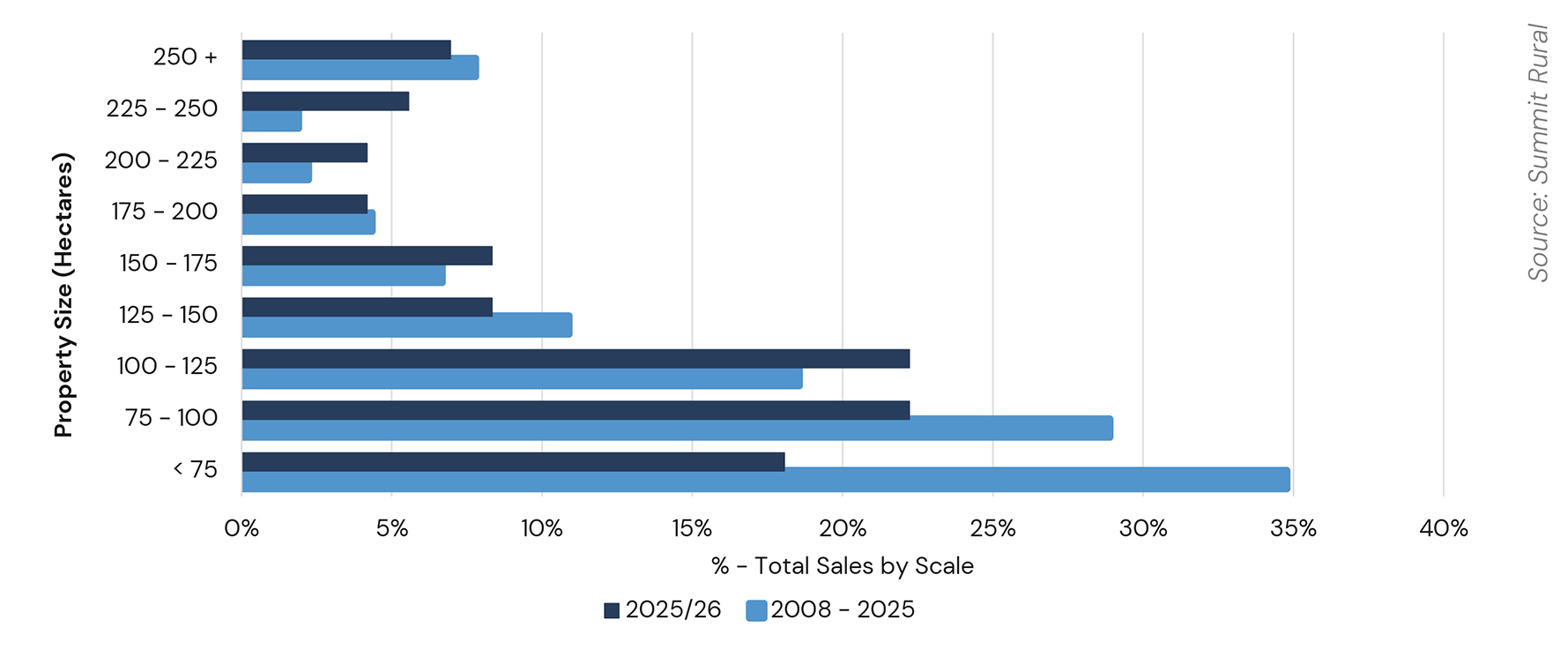
As the chart illustrates, the composition of sales has shifted quite markedly, with stronger demand for larger scale assets.
Historic data is shown in blue, while 2025/2026 trends are shown in dark blue. The average dairy farm in New Zealand comprises approximately 170 hectares; however, Waikato, similar to Bay of Plenty and Taranaki, is generally characterised by smaller landholdings.
While the dataset points to a degree of stagnation in sale prices, this is likely reflective of a higher proportion of larger properties having transacted during the period, which in turn supports market feedback indicating a general uplift.
Smaller farms continue, in many instances, to transact to neighbouring owners seeking to create larger, more economically efficient farming units. Consolidation therefore remains an ongoing trend.
Waikato Market vs Canterbury/Southland
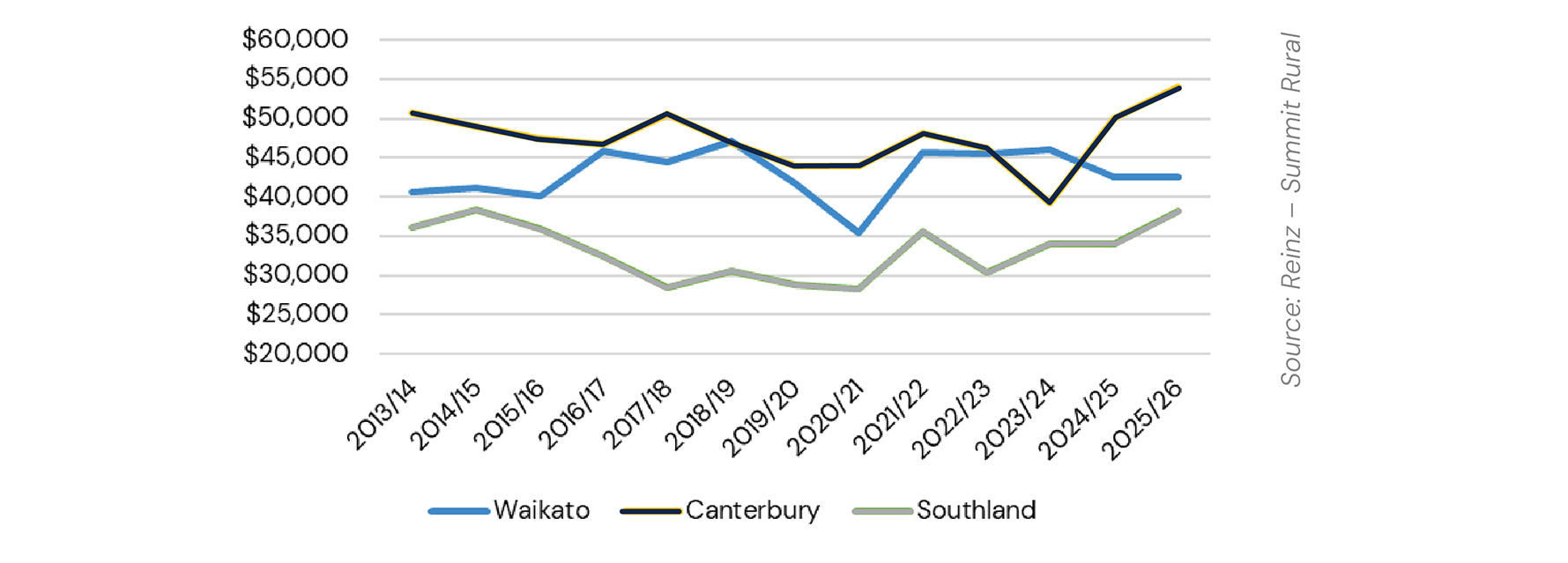
This chart shows the difference in values between other key dairying regions, Canterbury and Southland. The chart shows that Total Sale Prices/ha are now higher in Canterbury, while Southland has also shown a lift.
Within Canterbury there was a notable value lift during 2024/2025, with buoyancy continuing into this season. Southland has followed these trends, however not to
the same extent.
Due to an amendment in regulatory settings, dairy conversions are now a feature within this market, particularly for arable / grazing properties with higher cost water. The trend of new dairy conversion has yet to be seen within the Waikato. We don’t anticipate this will significantly feature.
Average Farm Sale Price ($/ha)
Farm Balance Sheets
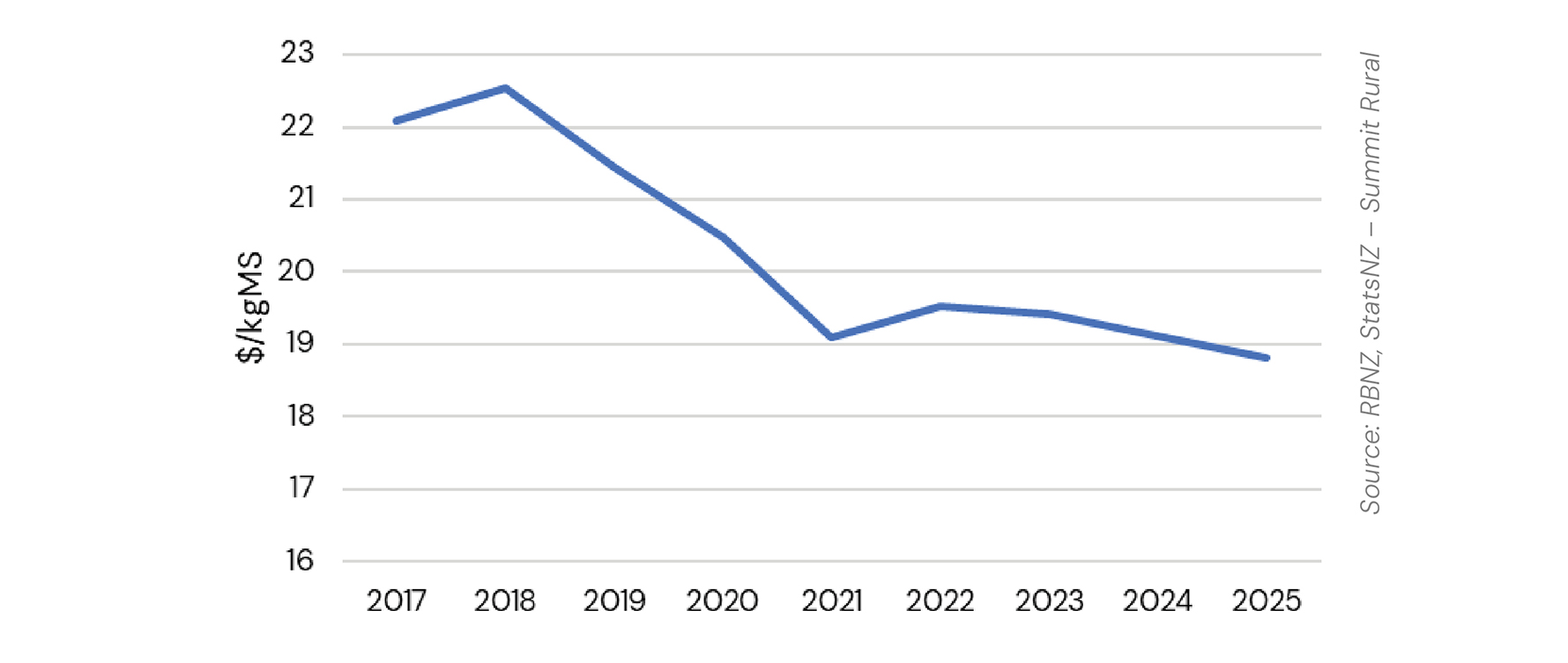
Below we summarise some key data produced by the Reserve Bank, analysed against total milk production. What this indicates is the increasing balance sheet strength within the dairy market.
Whilst in past years, land growth has been a key goal of many, it would appear many farmers are consolidating their balance sheets. Combined with the $2/kgMS Lactalis capital return, farm balance sheets will be in a strong position moving forward, whether this is for consolidation of the farming business, or put towards growth.
The capital return also has the potential to materially reduce bank lending across the sector, intensifying competition among lenders.
Debt /kgMS
Sheep and Cattle Market
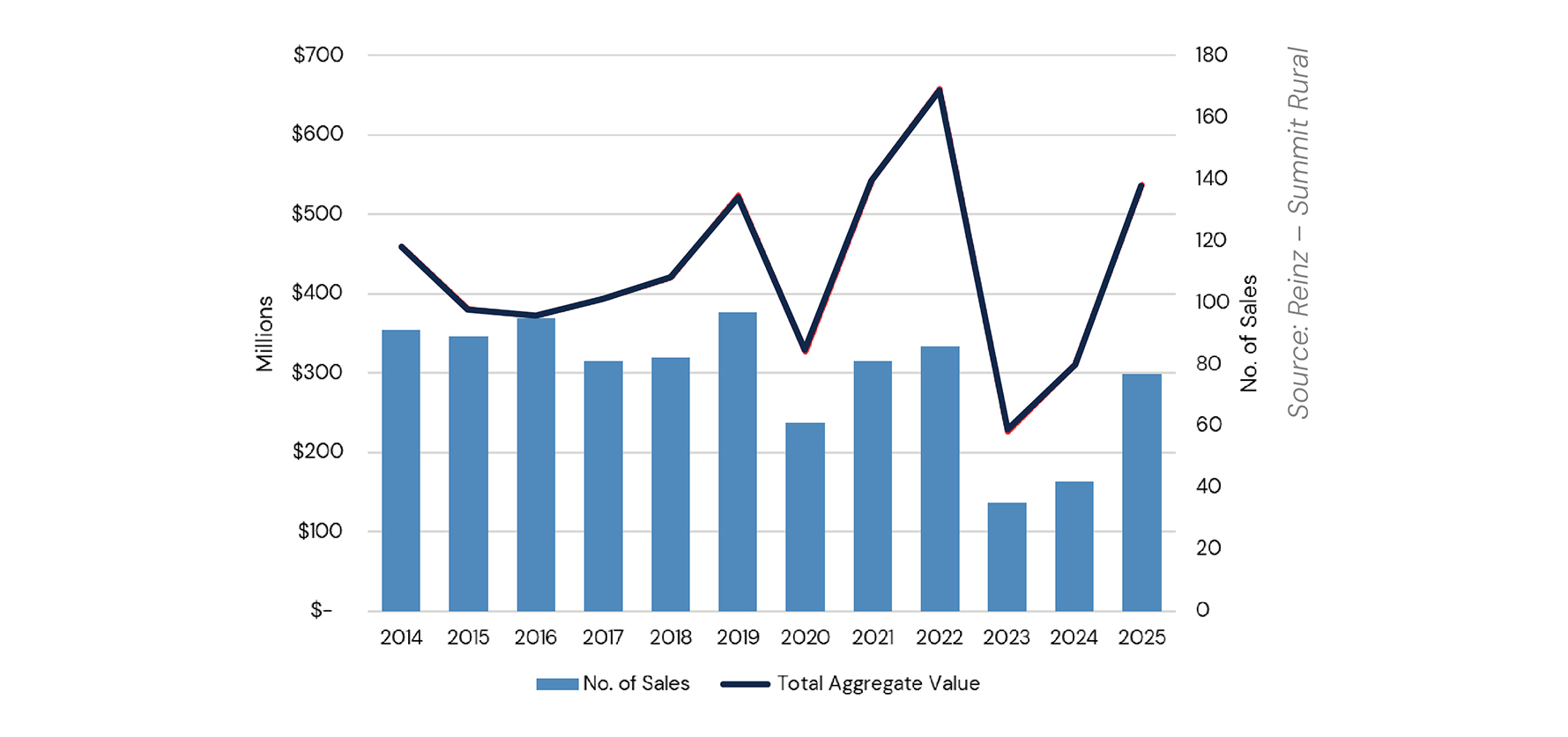
This chart shows 400 hectare and above transactions within New Zealand.
National Grazing Transactions (400 ha+)
vs Aggregate Value
Drystock Farming Economic Indicators –
Northern North Island
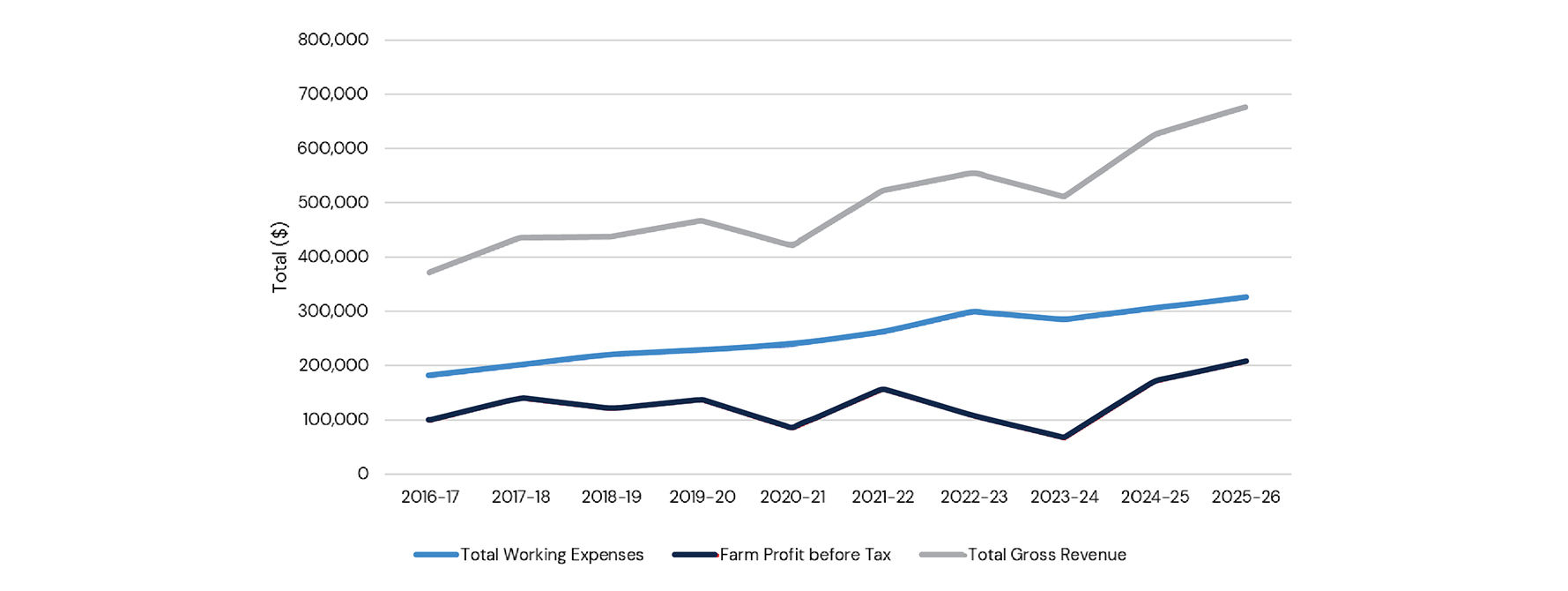
Historically high pricing for both cattle and sheep meat appears to have restored confidence within the market, with the total New Zealand aggregate volume increasing significantly.
With carbon now trading in the high $30’s to low $40’s /NZU and policy settings shifting away from ETS-driven farm to forest conversion (including limits on registering converted farmland in the ETS, now in force) alongside ongoing updates to NZ ETS unit limits and price control settings, we expect economic grazing values to continue trending back toward more typical, return-based fundamentals.
Offshore Buyers and Rural Land
Policy Settings and Market Implications
Recent overseas investment activity provides a useful reference point for the upper end of the market.
In late 2025, Laguna Bay received approval to acquire three adjoining dairy farms at Clydevale, Otago (about 845ha), with the buyer ultimately majority beneficially owned by pension funds administered by the Washington State Investment Board. The consent included a planned capital programme (including five irrigation pivots covering nearly 300ha and effluent/infrastructure upgrades)
This is notable in the context of the Government’s 2017 Ministerial Directive Letter which largely forbid the acquisition of significant farming interests within New Zealand.
This approval signifies a recent shift in policy direction under the current Government toward a more “open for business” setting, most clearly seen in the Overseas Investment (National Interest Test and Other Matters) Amendment Act passed in December 2025.
On a localised basis, we are aware of the pending acquisition of a large, scale equine property, while a smaller equine property recently transacted to an overseas purchaser, both well in excess of local market offers.
Historically, demand for larger capital assets was driven by offshore purchasers who generally had little appetite for smaller scale investment within New Zealand. With those investors excluded from the market since 2017, the liquidity of larger scale assets was impacted.
With interest rates now declining across many areas, the environment is shifting back toward higher yielding, productive assets. When rates are high, investors can earn attractive, low risk returns in deposits or bonds. As rates fall, capital is typically redirected into operating businesses, land, and growth opportunities. Offshore capital may start to play a bigger role again at the upper end of the rural market. Foreign buyers can add depth and competition for larger scale pastoral assets, which can support, and in some cases lift values. This is most likely to be most evident for premium, scalable properties, where the buyer pool has often been thinner when offshore participants have been absent.
Weather Events
With climate related impacts becoming more commonplace, the effect on value is a key consideration. In 2025, Summit Rural was engaged to research medium to long term “stigma” (or injury to land values) following significant weather events. Our work included transaction case studies after Cyclones Hale and Gabrielle, as well as the Nelson storm events (2025), supported by New Zealand and international academic research.
What we found
Floods usually cause an immediate drop in value. In the wake of an event, buyer risk perception spikes and discounts appear quickly.
Those discounts are rarely permanent. In most markets, values recover as time passes, repairs are completed, mitigation measures are implemented, and the underlying appeal of a location reasserts itself.
The biggest impact is typically early. International evidence (NZ, Australia, UK and US) shows the largest discounts often occur in the first 6–12 months, when risk is most “front of mind”.
Recovery timing varies. It depends on the scale of the event, the type/value of property, speed of repair, and the availability of insurance and flood defences. Higher value markets and quickly remediated properties often rebound sooner; lower value properties can take longer.
The key takeaway
Markets can be highly sensitive immediately after a flood, with the strongest price impacts typically concentrated in the first 6–12 months. The consistent message from New Zealand and international evidence is that this stigma is usually temporary. As repairs are completed, mitigation measures and planning responses are put in place, and insurance certainty improves, buyer perceptions tend to normalise.
In most cases, there is little evidence of lasting, long term value damage. Over time, prices often revert toward pre event levels as the market refocuses on fundamentals such as location, amenity, and land quality.
Long term value loss is the exception rather than the rule, and are most likely where flooding results in enduring physical or environmental damage, ongoing repeated inundation, or long term constraints on use.
If you, clients, or intermediaries, are considering a sale, purchase, refinancing, or a broader strategic review of farming assets, Summit Rural Limited can help interpret market evidence, benchmark and assess value, and provide strategic guidance to support decision making.
Please feel free to forward this newsletter to farming contacts or any rural professionals who may find it useful. And if there’s anything you’d like us to cover in upcoming editions, please let us know.
We’re passionate about the sector, so feel free to give us a call, or drop in for a coffee at our Waikato Innovation Park office.
Want the full details?
Download the complete PDF to view all information in one place.
Latest News

Waikato Rural Market Update – Quarter 1
2026 is moving fast! What’s shaping the Waikato rural property market this quarter? Read the latest update here.
